046 9293272
Open Mon - Fri

0 €0.00
products in your basketto quote Checkout
Ooops no items were found.
Try something else.
Ok
Loading…

How to Clean a Whiteboard: Remove Stains, Ghosting and Permanent Marker

10 min
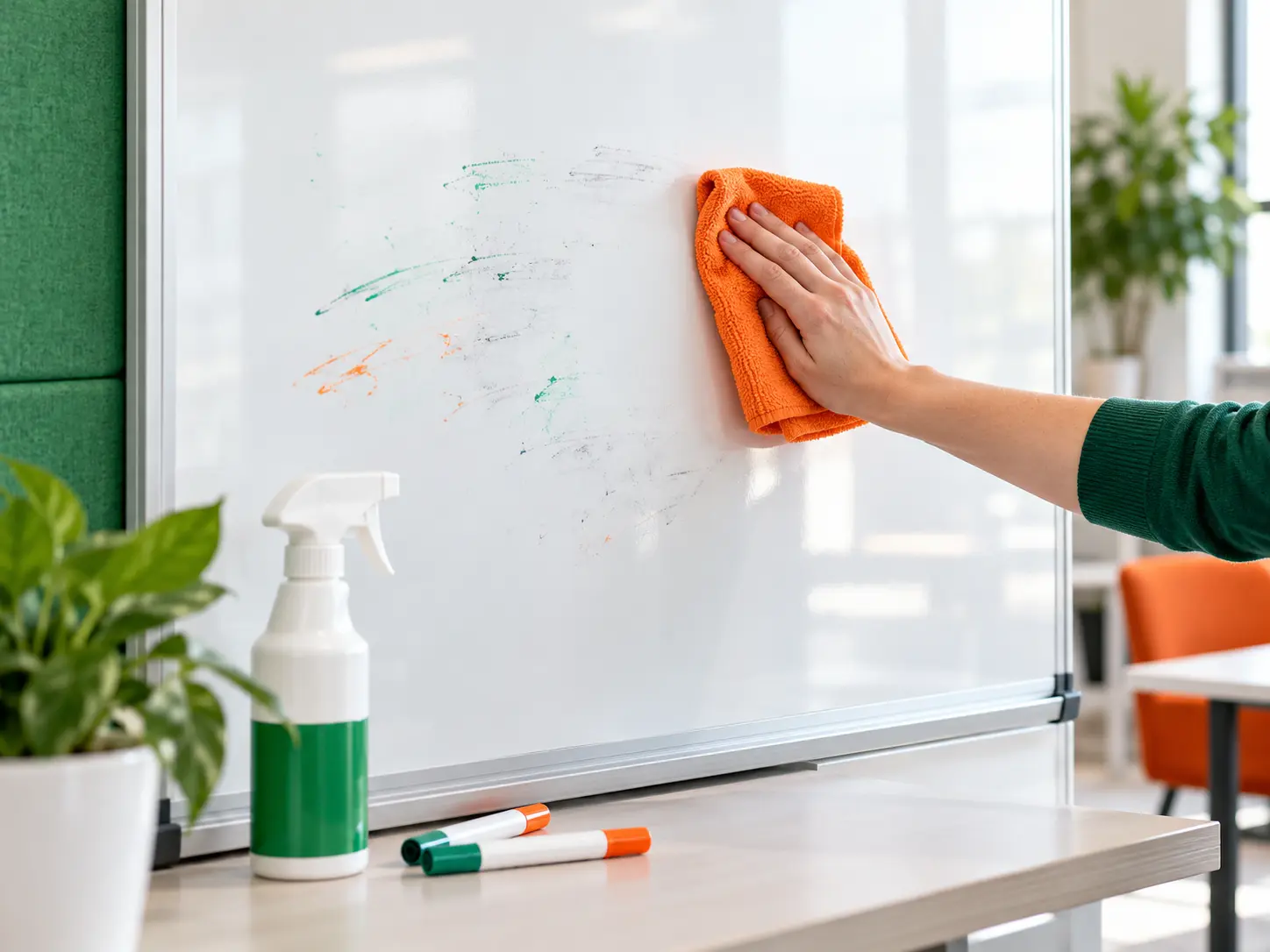
Hand cleaning a whiteboard with an orange microfibre cloth, with cleaning spray and drywipe pens nearby. Hand cleaning a whiteboard with an orange microfibre cloth, with cleaning spray and drywipe pens nearby.

Knowing how to clean a whiteboard properly can save a perfectly useful board from looking ready for retirement. Faint writing, grey smudges and the occasional permanent marker mishap are familiar sights in meeting rooms. The answer is usually a suitable cleaner and a clean cloth, rather than more determined scrubbing.

A clear board makes everyday notes easier to follow. Nobody wants to decipher this week's sales targets through the remains of last month's brainstorming session. Whether you use a small planning board at home or larger office whiteboards, the same starting point applies: identify the surface, choose compatible supplies and clean it gently.

How to clean a whiteboard: the quick answer

Erase dry writing with a clean board eraser. Apply a whiteboard cleaner approved for your board, following its instructions. Wipe with a soft microfibre cloth, then use a separate dry cloth to remove remaining moisture. Let the surface dry completely before writing again. Treat stubborn marks separately instead of scrubbing harder.

Before you start: check the board and gather your supplies

The best approach to whiteboard cleaning depends on what you are cleaning. A lightly used home organiser and a training room board may need different routines. Check the product label, original specification or manufacturer's care instructions before trying an unfamiliar cleaning product.

It also helps to look at where the marks appear. A broad grey film, a few old words and a single scratch are different problems. Check the board in good light so you can treat the affected area without repeatedly cleaning parts that are already clear.

Know your whiteboard surface

Melamine boards are commonly chosen for occasional use. They need regular attention because old ink can become harder to remove. Painted steel boards also need care appropriate to their coating. Enamel surfaces are generally more resistant to staining and suited to frequent use, although they still need cleaning.

If you use glass whiteboards, check that your cleaner, markers and eraser are suitable for that surface. A product being safe for a household window does not automatically make it the right choice for a writing board.

Magnetic does not tell you everything about the writing surface. Look up the board model rather than choosing a cleaner on that detail alone. When checking how to clean a whiteboard you have inherited with an office, finding its model number is a useful first job.

Put together a small cleaning kit

You do not need a cupboard full of products. Start with a clean eraser, an approved whiteboard cleaner and 2 soft cloths. Keep 1 cloth for cleaning and the other for drying. Suitable microfibre cleaning cloths should be clean, soft and free of grit or residue from other cleaning jobs.

The drywipe board accessories range is a useful place to find compatible supplies. Alternatively, a Nobo whiteboard starter kit brings together markers, an eraser and cleaning spray. Check the contents and suitability for your particular board before choosing a kit.

How to clean a whiteboard step by step

For ordinary ink residue and everyday smudges, work through the following routine. Before erasing anything, check whether the notes need to be saved. A quick photograph or a written copy can prevent the cleaning job from becoming an unexpected team discussion.

  1. Clear the writing area. Remove loose papers and magnets so you can reach the whole surface. Keep any planning accessories together rather than leaving them on the floor or the nearest desk. If the board is mobile, secure it using its wheel brakes before cleaning.
  2. Erase the dry ink first. Use a clean eraser and light pressure to remove loose writing. Allow recently written ink to dry before erasing it. Wet ink tends to smear, while a dirty eraser can redistribute the marks you are trying to remove.
  3. Apply the approved cleaner. Follow the label for application and any contact time. Some products are applied to the board and others to a cloth. Use the recommended amount and avoid soaking the frame, edges or pen tray.
  4. Wipe in manageable sections. Work across the board with a soft cloth, turning it frequently to expose a clean area. If one part remains marked, give it separate attention after the general clean. Repeatedly rubbing with an ink-covered cloth will not help.
  5. Finish with the drying cloth. Remove remaining moisture and cleaner residue according to the product instructions. Check the corners and lower edge where liquid can collect. The surface should be completely dry before you pick up a marker.
  6. Check the result. Write a small test word with a suitable drywipe marker. Let it dry and erase it. This helps you see whether the board is ready for use or whether a particular patch needs further attention.

Purpose-made whiteboard cleaning wipes can be convenient between sessions where they are approved for the surface. Keep the pack closed after use and still allow the board to dry. Learning how to clean a whiteboard is useful, but having the right supplies within reach makes the routine much more likely to happen.

Removing old ink, ghosting and permanent marker

Different marks need different treatment. Before adding another product, decide whether you are dealing with old drywipe ink, a faint shadow or the wrong type of marker. Knowing how to clean a whiteboard with stubborn marks starts with that distinction.

Old drywipe writing that will not erase

Writing left in place for a long time can be harder to shift with an eraser alone. Start with the normal cleaning routine, then revisit the affected area using the approved cleaner as directed. Give the product its specified contact time rather than immediately rubbing it away.

If ordinary cleaning is unsuccessful, check whether the manufacturer recommends a specialist renovator. Products such as the Durable whiteboard cleaner and renovator are designed for board residue and ghosting. Suitability still matters: a deeper cleaning product is not automatically suitable for every board.

Ghosting and faint shadows

Ghosting describes the faint traces of previous writing that remain after erasing. Check the cloth and eraser before blaming the board. If either is heavily loaded with ink, you may simply be spreading residue back across the surface.

Clean the affected area with the recommended product and a fresh cloth. Persistent marks may reflect staining or surface wear rather than dirt that can be removed. If the same patch remains difficult to write on and erase after appropriate cleaning, ask the manufacturer about the next step.

Accidental permanent marker

Someone has picked up the wrong pen. It happens. If the board manufacturer's guidance allows it, trace over a small area of the permanent ink with a fresh drywipe marker. Follow its recommended waiting time, then erase and clean the area with the approved board cleaner.

This can help lift the unwanted mark, but results depend on the board and how long the ink has been there. Test a small area first. Keep permanent markers in a separate stationery holder so the same mistake is less likely next time.

Gentle cleaning has its limits. If a mark will not lift, stop before trying abrasive pads or stronger chemicals. More pressure can turn a small stain into lasting surface damage. Check the board manufacturer's advice before changing products.

What to avoid when cleaning a whiteboard

Advice on how to clean a whiteboard often includes household shortcuts. A method that removes ink is not necessarily suitable for repeated use on a coated writing surface. Avoid choosing a product purely because it works well on a kitchen worktop or bathroom tile.

Scouring pads and abrasive cleaning pastes can damage the finish. General household cleaners may also be unsuitable for the coating. Hand sanitiser, nail varnish remover and improvised solvent mixtures should not become your standard board cleaning kit. Use only products the board manufacturer approves.

Keep the cleaning cloth dedicated to the board. A cloth previously used with furniture polish or a kitchen cleaner can bring unwanted residue with it. Wash reusable cloths according to their care instructions and replace any that have become rough or contaminated.

Finally, check the pen itself. Choose drywipe markers suitable for the writing surface. Similar-looking barrels do not mean similar ink. A clearly labelled marker tray is a small improvement that can save everyone a surprisingly large amount of cleaning.

Keep your whiteboard ready for the next meeting

Once you know how to clean a whiteboard, agree when it should happen. A busy training room may need attention after each session. A lightly used home office board can follow a different schedule. Base the routine on actual use and the manufacturer's recommendations.

Make clearing the board part of finishing a meeting. Save important notes first, erase anything no longer needed and return the supplies to their usual place. In shared rooms, add the board to the room reset checklist alongside chairs, cables and used cups.

Planning boards need a little more thought. If names, headings or targets stay in place for weeks, agree a regular time to copy the information and clear the whole board. Keep a simple record of what should remain and what can be erased. This avoids leaving old writing untouched simply because nobody is sure whether it still matters.

Give the eraser some attention too

An eraser that leaves grey trails is telling you something. Inspect its pad and follow the manufacturer's instructions for cleaning or replacement. Do not assume the whole eraser can be soaked or machine washed. A refillable whiteboard eraser lets you replace its working surface when needed, provided the correct refills are available.

Keep a spare cloth and suitable markers nearby so one missing item does not stop the routine. If you are reviewing the whole room, our guide to setting up a hybrid office covers the wider practicalities of shared spaces. The guide to essential office supplies can also help you plan regular stock checks.

A cleaner board usually starts with a better routine. MGM Office Supplies brings together everyday workplace products, making it easier to include board care supplies in your usual office order.

Frequently asked questions about whiteboard cleaning

How often should you clean a whiteboard?

Erase finished work after use and clean the surface as often as the manufacturer recommends for your board and its workload. A board used throughout the day needs more attention than an occasional planner. Smearing, shadows and a dirty eraser are useful prompts to check the routine rather than wait for the next scheduled clean.

Can you clean a whiteboard with water?

Some manufacturers allow water with a suitable microfibre cloth for light cleaning. Check your board's instructions first. Water may not remove older ink or stubborn residue, so an approved whiteboard cleaner may be needed. Avoid soaking the board and make sure it is fully dry before writing on it.

How do you clean a whiteboard with old marker on it?

Start by removing loose drywipe ink with a clean eraser. Apply an approved cleaner as directed, then wipe with a fresh cloth and dry the surface. If marks remain, check whether the manufacturer recommends a renovator. When deciding how to clean a whiteboard with old writing, avoid jumping straight to stronger household chemicals.

Why does my whiteboard still smear after cleaning?

Check for a dirty eraser, an ink-covered cloth, leftover cleaner or a surface that is still damp. Confirm that the marker is suitable too. If fresh supplies and the recommended cleaning method do not improve the result, inspect the board for wear and ask the manufacturer whether the surface needs further treatment or replacement.

12 products found
Sort by
Stronghold Blue Microfibre Cleaning Cloths (Pack of 10)
Assorted Whiteboard Markers Chisel Tip (Pack of 4) WX26038
Q-Connect Aluminium Magnetic Whiteboard 900x600mm KF01079
Q-Connect Drywipe Eraser Washable KF01972
Q-Connect Assorted 25mm Magnets Pack of 10 KF02643
Q-Connect Wooden Frame Whiteboard 400x300mm KF03569
Q-Connect Whiteboard Starter Kit Blister Pack
2Work Magnetic Refillable Whiteboard Eraser DB50836
Legamaster Whiteboard Accessory Holder White 7-122600
Sharpie Permanent Marker Fine Assorted (Pack of 12) 1986438
Bi-Office Magnetic Glass Drywipe Board 1200x900mm GL080101
2Work Whiteboard Cleaning Wipes (Pack of 100) DB50372
Total 12 products
SEARCH ×

Search