Favourites
 Fast Order
 Quick Lists


What Does GSM Mean on Paper? A Guide to Choosing the Right Printer Paper
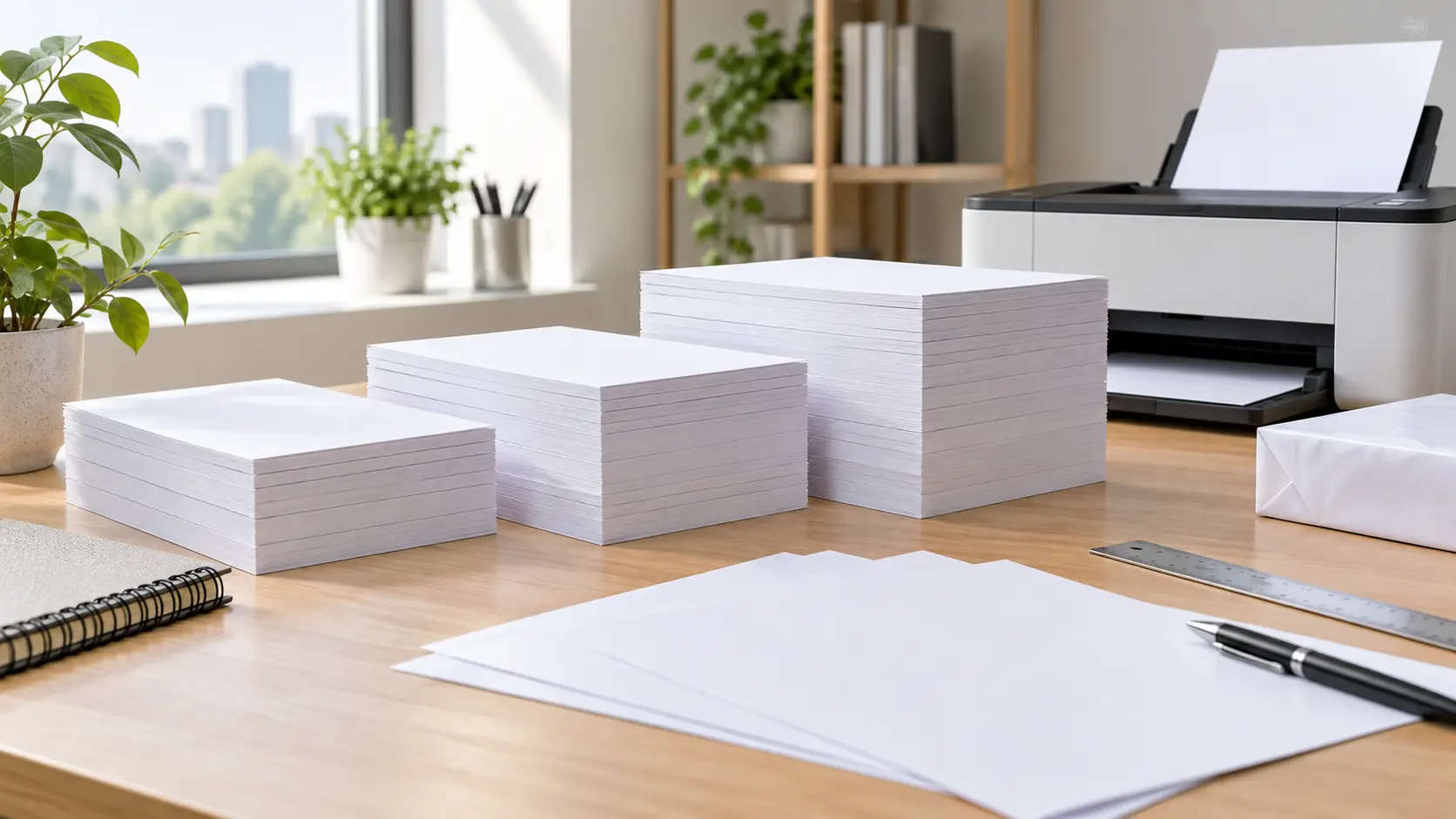
If you have ever shopped for printer paper, you have probably seen numbers such as 75gsm, 80gsm, 100gsm and 120gsm printed on the packaging. The question is, what does GSM mean on paper, and does choosing a higher number actually give you better paper?
GSM stands for grams per square metre. In simple terms, it describes the weight of the paper. A higher GSM usually means a heavier and more substantial sheet, while a lower GSM tends to be lighter and better suited to everyday printing.
Choosing the right printer paper is not simply a case of buying the heaviest option available. The best paper weight depends on what you are printing, how the document will be used and what your printer is designed to handle.
The quick answer: 80gsm is a popular choice for everyday office and home printing, while heavier paper such as 90gsm, 100gsm, 120gsm and 160gsm can be useful when you want a document to feel more substantial.
What Does GSM Mean on Paper?
GSM is a standard way of describing paper weight. Rather than measuring the weight of a single A4 sheet, it tells us how much 1 square metre of that particular paper would weigh.
GSM Stands for Grams Per Square Metre
If a square metre of paper weighs 80 grams, the paper is classed as 80gsm. If the same area weighs 120 grams, it is 120gsm.
This makes GSM useful because different paper sizes can still be compared fairly. An A3 sheet is obviously larger and heavier than an A4 sheet made from the same paper, but both can still be described as 80gsm because the material itself has the same weight per square metre.
You may also hear GSM referred to as the paper's grammage or simply its paper weight.
Does a Higher GSM Mean Thicker Paper?
Generally, paper with a higher GSM will feel thicker and more substantial than lighter paper. However, GSM technically measures weight rather than exact thickness.
The manufacturing process, fibres, finish and coating of a sheet can all affect how thick it feels. This means 2 different papers with the same GSM may not feel completely identical in your hand.
For everyday buying, though, GSM remains a very useful guide. Moving from standard paper to 100gsm, 120gsm or even 160gsm will usually produce a noticeably heavier sheet.
Common Paper GSM Weights Explained
There is no single paper weight that is best for every print job. Everyday internal documents have very different requirements from a presentation, certificate or printed cover.
The table below gives a useful starting point when comparing common printer paper GSM weights.
| Paper Weight | Typical Uses |
|---|---|
| 75gsm | High volume printing, drafts and everyday internal documents |
| 80gsm | General office printing, photocopying, homework and everyday documents |
| 90gsm | Reports, correspondence and documents where a slightly heavier feel is preferred |
| 100gsm | Presentations, proposals, reports and customer facing documents |
| 120gsm | Premium documents, certificates and presentation material |
| 160gsm | Covers, premium handouts, signs and heavier print applications |
| Heavier stock | Card, covers, displays and specialist print applications |
75gsm to 80gsm Paper
For most everyday office printing, you will probably spend most of your time around the 75gsm to 80gsm range.
80gsm paper is one of the most familiar choices for general printing and photocopying. It is suitable for emails, letters, internal documents, schoolwork, drafts and the vast majority of routine paperwork.
Lighter 75gsm paper can also work well for high volume printing where there is little benefit in using a heavier sheet. If an office is printing hundreds or thousands of pages of internal paperwork, a lighter everyday paper can be a perfectly sensible choice.
For most people looking for ordinary A4 printer paper, this is the weight range to consider first.
90gsm to 100gsm Paper
Moving up to 90gsm paper or 100gsm paper gives a document a slightly more substantial feel.
This can work particularly well for reports, proposals, important correspondence and documents being given to customers or clients. The difference does not need to be dramatic. Sometimes that small increase in weight is enough to make a printed document feel noticeably more considered.
Heavier and more opaque papers can also be useful for double sided printing because text and images from the reverse side may be less noticeable through the sheet.
This does not mean every important document needs 100gsm paper. A good quality everyday sheet can still produce excellent results. The right choice depends on the finish you want and the type of document being printed.
120gsm to 160gsm Paper
120gsm paper begins to feel noticeably heavier than ordinary copier paper and can be a useful option for presentations, certificates, premium handouts and documents designed to make more of an impression.
Moving up again to 160gsm paper gives an even firmer and more substantial result. It can be useful for document covers, notices, premium presentation material and other print jobs where ordinary office paper may feel too light.
Beyond this point, many jobs begin to move into heavier paper and card. Card can be useful for covers, signage, displays, menus and creative applications where additional rigidity is required.
Heavy stock should not simply be placed into any printer without checking first. Printers are designed to work within particular media weight ranges, and some machines may require heavier paper to be fed through a manual or specialist tray.
80gsm vs 100gsm Paper: What's the Difference?
One of the most useful comparisons when choosing office paper is 80gsm vs 100gsm paper. Both can be used for everyday documents, but they suit slightly different purposes.
80gsm Paper
- Ideal for everyday office printing
- Good for high volume print jobs
- Suitable for letters, emails and internal documents
- Lighter to store and transport in bulk
- A practical general purpose choice
100gsm Paper
- Feels heavier and more substantial
- Useful for reports and presentations
- Well suited to customer facing documents
- Can be helpful for double sided printing
- Provides a more premium feel when required
For everyday office work, 80gsm will often be the more practical choice. There is usually little reason to print routine meeting notes, filing copies or internal emails on heavier paper.
For a proposal being presented to a new customer, a formal report or an important presentation, moving up to 100gsm may help the document feel more substantial.
The important point is that 100gsm is not automatically better than 80gsm. It is simply better suited to some jobs.
How to Choose the Right GSM for Your Printer
Paper weight is only one part of choosing the right paper. The printer itself and the type of document you are producing should both influence your decision.
Check What Your Printer Supports
Before using particularly heavy paper or card, check the specifications for your printer. Manufacturers usually provide a supported range of paper weights for each tray or feed method.
Colour laser printers and inkjet printers are generally designed to handle standard office paper without difficulty, but heavier media may need different settings or another feed tray.
Trying to force unsuitable card through a printer can lead to paper jams, poor feeding or disappointing print quality. Checking the manufacturer's instructions takes a lot less time than dismantling the printer to retrieve a crumpled sheet afterwards.
Think About What You Are Printing
A simple way to choose paper GSM is to start with the purpose of the document.
- Everyday office printing: 75gsm to 80gsm will usually be sufficient.
- Reports and important correspondence: 90gsm to 100gsm can provide a more substantial finish.
- Presentations and premium documents: 100gsm to 120gsm may be worth considering.
- Covers and heavier printed pieces: 160gsm or card may be more suitable, provided your printer supports it.
- Photographs and image-heavy printing: Consider dedicated photo paper rather than choosing on GSM alone.
Paper colour can matter too. White paper is the everyday choice, but coloured paper can be useful for notices, filing systems, presentations, classroom material and documents that need to stand out.
Consider Single or Double Sided Printing
If you regularly print on both sides of the page, GSM is worth considering alongside opacity.
Very lightweight paper can allow printing on the reverse side to show through, particularly where pages contain large areas of dark text, graphics or colour. A more opaque sheet, often found among slightly heavier paper ranges, can help keep both sides easier to read.
This makes paper in the 90gsm to 100gsm range worth considering for double sided reports and presentations, although the quality and opacity of the individual paper still matter.
Does Higher GSM Mean Better Paper?
No. A higher GSM tells you that the paper is heavier. It does not automatically tell you that it is better.
Using premium 120gsm paper for hundreds of pages of internal notes would normally add weight and cost without providing much practical benefit. Equally, a very lightweight sheet might not give an important presentation the finish you want.
Paper quality is influenced by several characteristics in addition to GSM. These can include:
- Brightness and whiteness
- Surface smoothness
- Opacity
- Coating or finish
- Inkjet or laser compatibility
- How consistently the paper feeds through a printer
The best approach is to match the paper to the job. MGM Office Supplies stocks everything from everyday copier paper to heavier, coloured and specialist papers, giving you plenty of options without simply reaching for the highest GSM available.
Remember: for normal office printing, a reliable everyday paper may be exactly what you need. Save the heavier options for documents where the extra weight genuinely adds something.
Paper GSM FAQs
What GSM is normal printer paper?
80gsm is one of the most common weights for everyday printer and copier paper. It is suitable for general office documents, letters, homework, photocopying and routine printing.
Is 80gsm paper good for everyday printing?
Yes. 80gsm paper is a practical choice for most normal home and office printing. It provides a good balance between weight, usability and cost for everyday documents.
Is 100gsm better than 80gsm?
Not necessarily. 100gsm paper is heavier and may give reports, proposals and presentations a more substantial feel, but 80gsm is often more practical for normal office printing. The better option depends on what you are producing.
What GSM paper is best for double sided printing?
There is no single required GSM for double sided printing, but a good quality 90gsm or 100gsm paper can be useful where you want to reduce show through. Opacity is also important, so 2 papers with the same GSM may perform differently.
Can I use 120gsm or 160gsm paper in a normal printer?
Many printers can handle heavier paper, but the maximum supported weight varies considerably between models. Check the manufacturer's specifications before loading 120gsm, 160gsm or card stock, as heavier media may require a manual feed or multipurpose tray.
Is GSM the same as paper thickness?
No. GSM measures the weight of paper in grams per square metre, while thickness is a separate physical measurement. Heavier GSM paper will often be thicker, but the 2 measurements are not interchangeable.