 Favourites
 Fast Order
 Quick Lists


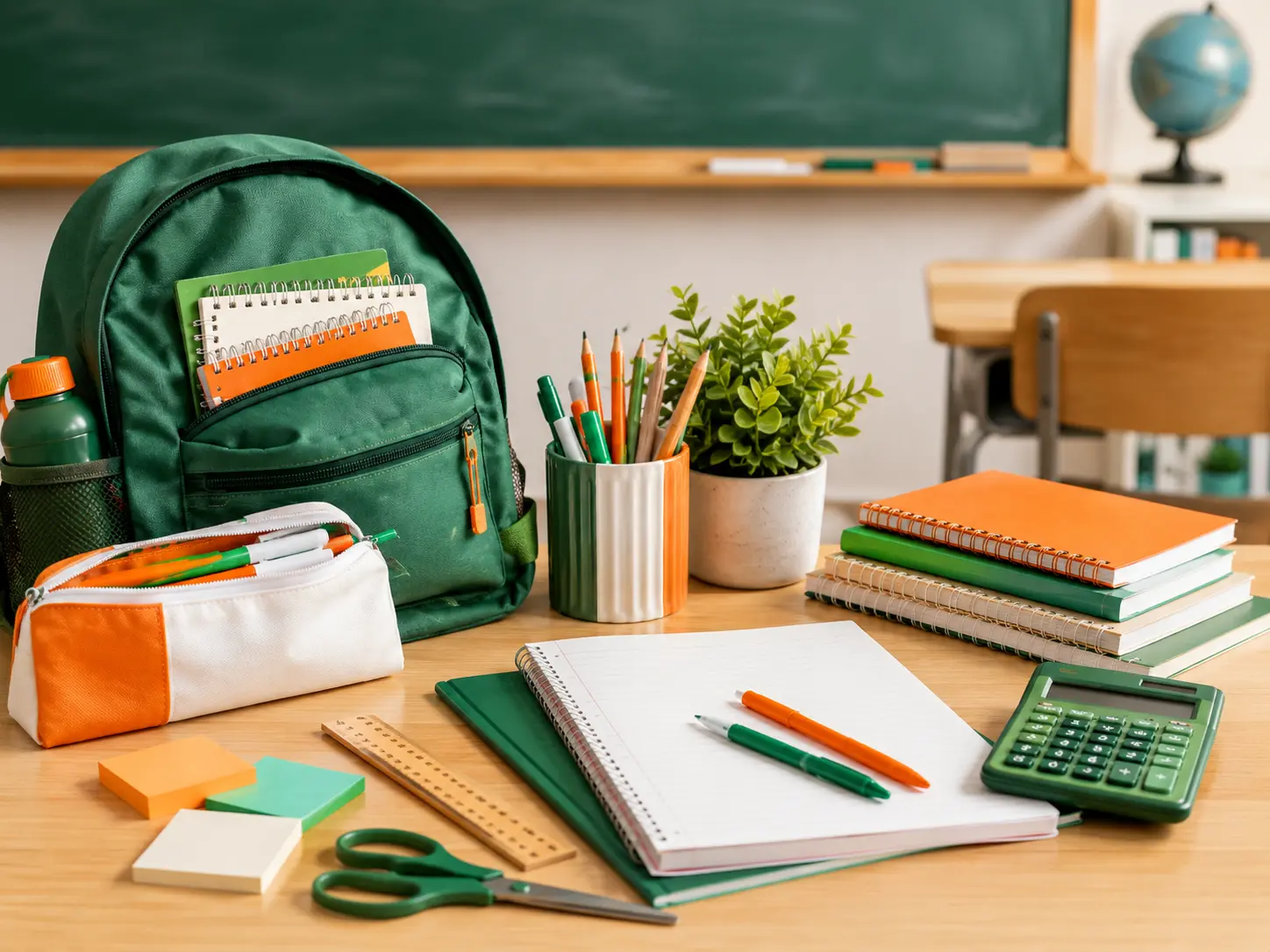
The end of the summer holidays always seems to arrive a little faster than expected. Suddenly, school bags need finding, uniforms need checking and the search for back to school supplies begins.
Getting organised early can make the return to school much easier, but that does not mean buying every piece of stationery in sight. Most students need a reliable collection of everyday essentials, along with a few items that depend on their age, subjects and school requirements.
This checklist covers the most useful school stationery to consider before the new term starts, from pens and notebooks to folders, calculators and study supplies. Before filling the basket, it is always worth checking what survived from last year too. A perfectly good ruler does not suddenly stop working because September is approaching.
A good place to start: Check the school's own stationery list first, then see what can be reused from last year before buying anything new.
What Back to School Supplies Do You Actually Need?
The exact list of school supplies will vary between primary school, secondary school and further education. Individual schools and teachers may also have their own requirements. Even so, there are plenty of everyday items that appear on most school stationery lists.
Starting with these basics gives students what they need for the first few days without buying large quantities of stationery that may never get used.
Pens, Pencils and Everyday Writing Essentials
A dependable selection of pens and pencils should be near the top of any back to school supplies checklist. Students may need blue or black ballpoint pens for everyday written work, with red, green or coloured pens sometimes useful for corrections and note taking.
HB pencils remain useful across a wide range of subjects, particularly maths, science, art and any lesson involving diagrams. A pencil sharpener and eraser are simple additions that are easy to forget until they are needed.
A ruler is another inexpensive school essential worth checking before term starts. For younger students it may be used throughout the day, while older students will still need one for maths, graphs, science and technical subjects.
There is no great advantage in sending somebody to school with 25 pens on the first day. A few reliable writing tools in a pencil case, plus some spares at home, will usually be far more practical.
Notebooks, Refill Pads and Paper
Schools often provide exercise books, but older pupils and students are more likely to need their own notebooks, writing pads or refill paper.
A4 refill pads are particularly useful for taking notes across several subjects. Pages can be transferred into the appropriate folder afterwards, helping students avoid carrying multiple heavy notebooks around all day.
It is worth checking whether subjects require lined, plain or graph paper before buying. Maths and science students may need graph paper, while plain sheets can be useful for diagrams, drawings and project work.
For printing homework, research or revision material at home, keeping a pack of good quality printer paper nearby can also prevent the familiar discovery that the printer tray is empty 10 minutes before something needs to be handed in.
Highlighters, Markers and Revision Supplies
Highlighters become particularly useful as students begin working with longer notes, textbooks and revision material. Using different colours can help separate key facts, definitions, dates and information that needs another look.
Coloured pens and markers can serve a similar purpose, especially for diagrams, mind maps and revision cards. The aim should be to make notes easier to understand rather than turning every page into a rainbow.
Sticky notes and page markers are also useful additions for students who revise from textbooks or large sets of notes. They make it much easier to return to an important page without folding half the corners of the book.
Keeping Schoolwork Organised From Day 1
Buying school stationery is only half the job. Keeping it organised once lessons begin can make a surprisingly big difference.
Loose worksheets have a remarkable ability to disappear exactly when they are needed. Giving each subject somewhere specific to live makes homework, revision and preparing for class much simpler.
Folders, Ring Binders and Dividers
Folders and ring binders are particularly useful for secondary school students who receive printed worksheets, revision notes and handouts throughout the year.
A lightweight folder may be enough for a subject with relatively little paperwork. Subjects that generate several months of notes may be better suited to a lever arch file kept at home.
Dividers can then separate topics within the same binder. Rather than searching through 100 pages for a particular chapter, students can go directly to the section they need.
Document Wallets and Everyday Filing
Document wallets are a simple alternative when a full ring binder is unnecessary. They are useful for homework sheets, permission forms, project notes and work that needs to travel between school and home.
Using different colours for different subjects can also make finding the right folder much quicker.
Punched pockets are another useful option for sheets that cannot be hole punched directly, helping protect important notes and project work.
MGM has a broad selection of files, pockets and binders, covering many of the filing products that are useful for organising school notes and coursework.
School Supplies for Maths, Art and Different Subjects
Not every student needs exactly the same school supplies. Subject choices become more important as pupils move through secondary school, so it is sensible to check requirements before buying specialist equipment.
Maths and Technical Subjects
A calculator is likely to become an important part of the school bag as maths becomes more advanced. Older students may require a scientific calculator rather than a simple desktop model.
Schools or teachers will often recommend a particular type, especially when students are preparing for examinations. Checking those requirements before buying avoids ending up with a calculator that cannot perform the functions needed in class.
Other useful supplies may include a ruler, pencils, eraser and graph paper. Certain subjects may require geometry equipment too, although it is worth following the school's own list rather than assuming every student needs the full set.
Art and Creative Work
Art brings a different collection of back to school supplies into the mix. Depending on the age of the student and the subject, this may include colouring pencils, markers, scissors, glue and different types of paper.
Younger pupils may use these products across several lessons rather than in a dedicated art class. Older art students are more likely to receive a specific materials list from their teacher.
Scissors are a good example of something worth checking before automatically buying. Younger pupils may need safety scissors, while older students working on art or project work could require something more suitable for detailed cutting.
The same rule applies to markers and colouring supplies. A modest set that will actually be used is usually better than an enormous collection that spends most of the year at the bottom of a drawer.
A Few Back to School Essentials People Often Forget
The obvious school stationery usually gets remembered. Pens, pencils and notebooks make the list without much trouble. It is often the smaller practical items that are missed until school has already started.
Quick Back to School Checklist
- Folders for loose worksheets
- Refill paper and pads
- Scissors where required
- A calculator for relevant subjects
- Printer paper for homework and projects
Students who regularly print homework should also check the printer itself before the new term begins. Having plenty of paper is not much help when the printer ink runs out halfway through a project.
It can also be useful to keep a small collection of frequently used office supplies at home. Many everyday workplace products have an equally useful role in schoolwork, including staplers, paper clips, sticky notes, folders and filing accessories.
A dedicated study area can help too, particularly for older students with regular homework and revision. It does not need to look like a corporate office. A clear surface, decent lighting and somewhere sensible to keep stationery are usually more valuable than filling the space with accessories.
If a more permanent home study space is being created, choosing a suitable office desk can provide enough room for books, written work and a laptop without homework taking over the kitchen table every evening.
Getting Ready for the New School Year
A good back to school checklist starts with looking at what is already available. Plenty of school supplies can be reused from 1 year to the next. Calculators, rulers, scissors, folders and pencil cases do not need replacing simply because the calendar has changed.
Next, check any stationery list supplied by the school. This is particularly important for secondary school students, where subject choices may determine the type of calculator, notebook or equipment required.
One useful tip: Buy the everyday essentials first, then add more specialised items once teachers have confirmed what will actually be needed.
Once the essentials have been gathered, giving everything a home before school starts makes the first week easier. Folders can be labelled, pens can go into the pencil case and spare stationery can be kept together at home rather than scattered across several drawers.
Buying gradually can also make more sense than trying to predict everything needed for the full school year. Start with the essentials, then add subject specific items once teachers have confirmed what will actually be used.
For families looking for school supplies in Ireland, MGM Office Supplies carries a wide range of school stationery, paper, writing products, filing supplies and other practical items that can help students get organised for the new school year.
The best back to school supplies are not necessarily the biggest collection. They are the things a student will reach for regularly, know where to find and still be using long after the excitement of a brand new pencil case has worn off.
Back to School Supplies FAQs
What are the most important back to school supplies?
The basic school essentials usually include pens, pencils, an eraser, pencil sharpener, ruler, notebooks or paper and suitable folders. Older students may also need highlighters, refill pads, a calculator and subject specific equipment. Always check the school's own stationery list before buying specialist items.
What stationery does a secondary school student need?
Secondary school students will commonly use pens, pencils, notebooks, refill pads, folders, highlighters and a ruler. A scientific calculator may also be required for maths and science subjects. Individual requirements vary depending on the student's year group and chosen subjects.
When should you buy back to school supplies?
It is worth checking school supplies a few weeks before the new term rather than leaving everything until the final evening of the holidays. Start by checking what can be reused from the previous year, then compare what is missing with any list supplied by the school.
Is it worth reusing school supplies from last year?
Yes. Many school stationery products can easily be used again. Calculators, rulers, scissors, folders, binders and other durable items should only need replacing when they are damaged, lost or no longer suitable. Reusing them can reduce unnecessary spending and waste.
What should I check before buying school stationery?
Check the student's year group, subjects and any instructions issued by the school. It is also worth going through stationery left from the previous term. This helps avoid buying duplicates and makes it easier to concentrate on the school supplies that are genuinely needed.


